Sleep Anxiety: Why You Feel Wired the Moment You Lie Down
Updated: Aug 10
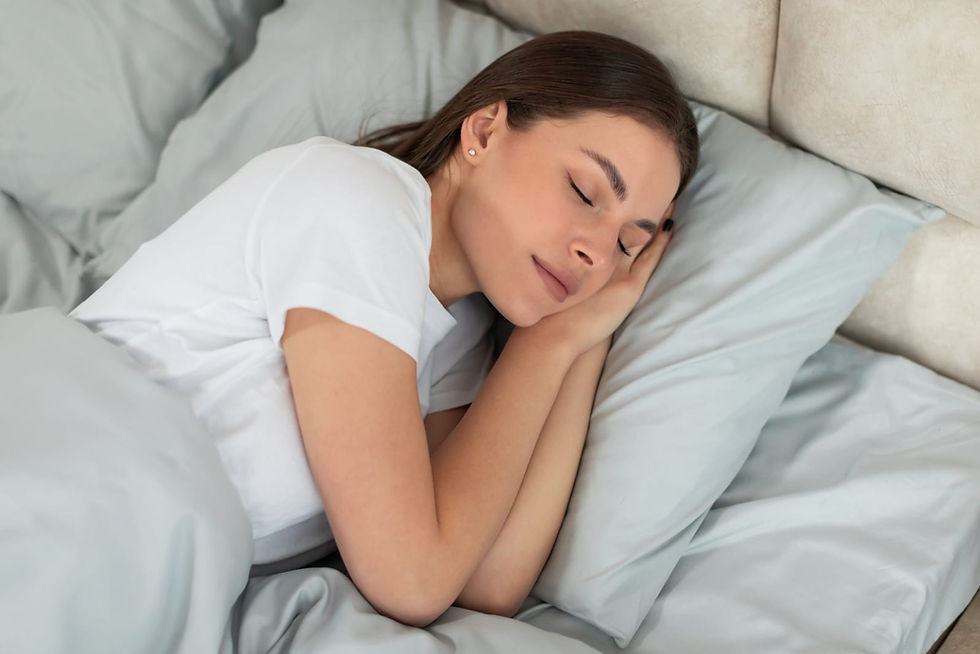
It's one of the most common things people describe to me, almost word for word: "I'm exhausted all day, but the second I get into bed, my brain switches on." The lights go off, the house goes quiet, and suddenly your mind decides this is the perfect moment to run through tomorrow's to-do list, replay an awkward conversation from three years ago, or simply spiral into "why can't I just sleep?"
This isn't the same as classic insomnia, and it isn't just "being a bit stressed." It has a name — sleep anxiety — and it's becoming one of the most talked-about sleep struggles I've seen in years. Sleep is increasingly being discussed as part of the wider mental health conversation rather than treated as a separate, purely physical issue, and more people are openly admitting that it isn't lack of tiredness keeping them awake — it's dread.
If that sounds familiar, I want to walk you through what's actually happening in your mind and body at bedtime, and what genuinely helps — because in my 25 years as a clinical hypnotherapist, poor sleep caused by anxiety is one of the most responsive problems there is, once you approach it the right way.
What Sleep Anxiety Actually Is
Sleep anxiety is the fear or dread of not being able to sleep — and it's often worse than the sleeplessness itself. It tends to show up in one (or both) of these ways:
Anticipatory anxiety — dreading bedtime hours before it arrives, because you're already bracing for another bad night
Racing mind at lights-out — the moment you stop being busy, your brain fills the silence with worry, planning, or replaying the day
The cruel irony is that trying hard to sleep is itself a form of mental effort, and mental effort is the exact opposite of what your body needs to drift off. The harder you try, the more awake you become. Over time, your bed stops feeling like a place of safety and starts to feel like a battleground — which only feeds the anxiety further.
Why "Sleepmaxxing" Isn't Fixing This
You've probably seen the explosion of sleep gadgets, trackers, and biohacks over the last couple of years — the trend often nicknamed "sleepmaxxing." Supplements, wearables, mouth tape, cooling mattresses, elaborate nighttime routines. Some of it is genuinely useful. But a growing number of sleep researchers are raising a real concern: the more obsessively people chase a "perfect" sleep score, the more anxious about sleep they can become — a pattern now being described as orthosomnia, or an unhealthy pursuit of perfect sleep.
If your sleep problem is rooted in anxiety, adding more data, more devices, and more pressure to "get it right" often makes things worse, not better. What actually helps with sleep anxiety isn't more information — it's calming the nervous system and quietening the mental loop, which is a completely different job.
7 Things That Actually Help With Sleep Anxiety
1. Name it as anxiety, not insomnia. This sounds small, but it changes everything. Insomnia advice focuses on habits and environment. Anxiety needs your nervous system calmed down, not just your bedroom darkened.
2. Get out of bed if you're wired, not tired. Lying there "trying" reinforces the bed-equals-frustration association. Get up, do something calm and low-stimulation in dim light, and go back only when you feel sleepy rather than simply tired.
3. Do a "worry download" earlier in the evening. Write down anything looping in your mind — the to-do list, the unresolved conversation, the what-ifs — an hour or two before bed, not at lights-out. This gives your brain permission to let it go later.
4. Slow your exhale. A longer exhale than inhale (try counting 4 in, 6–8 out) directly signals your nervous system to shift out of fight-or-flight. It's simple, but it's one of the fastest physical ways to interrupt anxiety at bedtime.
5. Reduce evening light, especially in the hour before bed. Circadian rhythm awareness has moved firmly into mainstream conversation for good reason — evening light exposure delays melatonin and keeps your brain more alert right when you need it winding down.
6. Use guided relaxation or meditation instead of scrolling. Anxiety thrives on an unoccupied mind. A guided audio gives your brain something calm and structured to follow instead of looping thoughts — my Guided Meditation for Anxiety and Panic Attacks is designed for exactly this: settling a racing mind before it has the chance to spiral.
7. Retrain the association between bed and calm, not effort. This is the piece most people miss, and it's where self-hypnosis is particularly effective — because it works with the mind's automatic patterns rather than trying to force sleep through willpower.
Why Self-Hypnosis Works So Well for Sleep Anxiety Specifically
Self-hypnosis guides your mind into a deeply relaxed, receptive state — not sleep itself, but the calm middle ground between waking and sleeping. In that state, the fight-or-flight response that keeps anxious sleepers wired begins to ease, breathing slows, and the looping, anxious thoughts lose their grip because your mind is gently occupied with something calm instead.
With regular use, your mind starts to relearn that bed means rest, not battle. I've written more about exactly how and why this works in Can Self-Hypnosis Really Help You Sleep Better? Here's the Truth, if you'd like to understand the process in more depth.
Fall Asleep Fast Sleep Hypnosis MP3 — for a racing mind at lights-out that just won't settle
Insomnia Relief – Self-Hypnosis Audio for Deep Sleep — for quietening the mind when anxiety has become a nightly pattern
Overcome Insomnia & Sleep Problems Guided Meditation MP3 — if you find meditation easier to settle into than hypnosis, this covers the same ground in a gentler format
A Final Thought
If you've been lying awake dreading bedtime, please know this: it isn't that you can't sleep. It's that your mind has learnt a pattern of bracing for a bad night, and that pattern can be unlearnt. Sleep anxiety responds remarkably well once you stop trying to force sleep and start calming the mind instead — gently, consistently, and without judgement.


